Toki Pona nanpa-linja-n decimal number system ilo pi pana nanpa


Welcome to the Toki Pona nanpa-linja-n decimal number system.
At last, nanpa-linja-n offers an elegant solution to the challenge of representing and communicating decimal numbers consistently. kama pona tawa lipu ilo pi nasin nanpa-linja-n pi nanpa linja n pi toki pona.
At last, nanpa-linja-n offers an elegant solution to the challenge of representing and communicating decimal numbers consistently. kama pona tawa lipu ilo pi nasin nanpa-linja-n pi nanpa linja n pi toki pona.
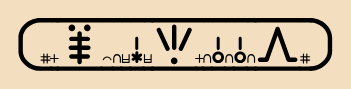
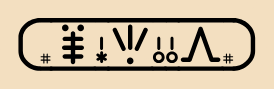
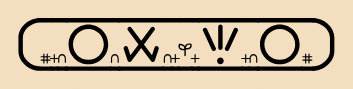
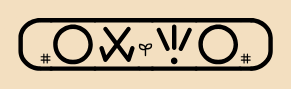
nanpa-linja-n encodes decimal numbers as proper names. In sitelen pona, these names are written inside numeric cartouches.
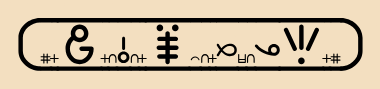
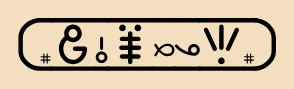
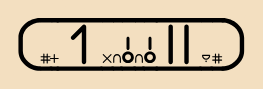
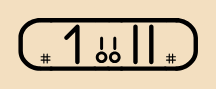
The content of a nanpa-linja-n cartouche is a pure encoding. Each decimal digit—and each numeric delimiter, such as a decimal point—has a designated sitelen pona glyph and a corresponding Latin-letter representation. This mapping is unique and reversible, allowing the original decimal sequence to be reconstructed exactly from either form.
nanpa-linja-n does not introduce any new Toki Pona words or add anything to the Toki Pona lexicon. It is a notation system only. Any “words” discussed below are identifier strings, or proper-name labels, derived from the encoded cartouche. When a nanpa-linja-n proper name is written in the Latin alphabet, each word begins with a capital letter.
The ten Toki Pona letters i, w, t, s, a, l, u, m, p, and j represent the decimal digits 0, 1, 2, 3, 4, 5, 6, 7, 8, and 9, respectively, within numeric cartouches.
The letters n and e are used to structure the encoding and make the proper name derived from the cartouche pronounceable. The letters o and k, used in various combinations, represent numeric punctuation and delimiters, such as the decimal point.
Every letter in the Toki Pona Latin alphabet therefore has a distinct function within nanpa-linja-n.
PDF cheat sheet
Precise decimal numbers appear everywhere: in dates, times, measurements, percentages, telephone numbers and many other forms. Hindu–Arabic digits are also visually distinct from the surrounding alphabetic text, making numeric values easy to recognise at a glance.
nanpa-linja-n preserves this useful visual distinction in Toki Pona. In Latin text, decimal numbers are represented as capitalised proper names, distinguishing them from ordinary Toki Pona words. In sitelen pona, they are represented using numeric cartouches, making numeric values immediately recognisable within the surrounding sitelen pona text.
nanpa-linja-n represents exact decimal numbers through proper names using a small, reusable set of digit syllables and numeric punctuation words. Once the ten digit syllables and a few separators are familiar, the same system can be used to read and write integers, decimals, fractions, dates, times and much more.
The examples below may initially look unfamiliar, but they are all constructed from the same repeating rules. You do not need to learn a separate method for each type of number.
| Usage | Example | nanpa-linja-n proper name | nanpa-linja-n sitelen cartouche | nanpa-linja-n abbreviated cartouche | #~ abbreviation |
|---|---|---|---|---|---|
| Integers | 42 |
Nenatun |
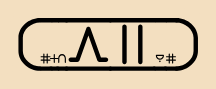 |
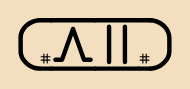 |
#~AT |
| Positives | +89 |
Nene Pijen |
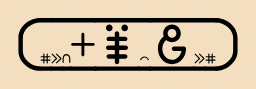 |
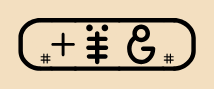 |
#~ePJ |
| Negatives | -3 |
Neno Sen |
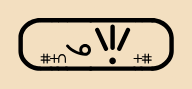 |
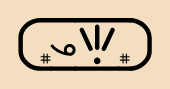 |
#~oS |
| Decimals | 0.5 |
Nenin One Lun |
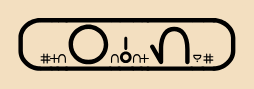 |
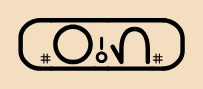 |
#~IoL |
| ISO thousands | 4,321 |
Nenan Eke Setuwan |
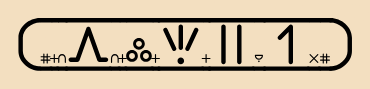 |
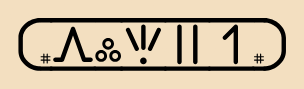 |
#~AkSTW |
| Percentages | 67% |
Nenumun Oken |
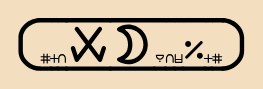 |
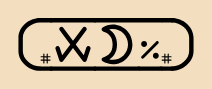 |
#~UMok |
| Scientific notation | 9.8e-3 |
Nejen One Pin Eko Nosen |
 |
 |
#~JoPekooS |
| Fractions | 1/2 |
Newan Ono Tun |
 |
 |
#~WooT |
| Integers and fractions | 8+3/4 |
Nepin Oko Sen Ono Nan |
 |
 |
#~PokoSooA |
| Large integers | 1,234,567 |
Newan Eke Tusenan Eke Lunumun |
 |
 |
#~WkTSAkLUM |
| ISO Dates | 2026-07-18 |
Netunitunun Eke Nimun Eke Wapin |
 |
 |
#~TITUkIMkWP |
| ISO Times | 06:30 |
Neninun Eke Senin |
 |
 |
#~IUkSI |
| Telephone numbers | +1-432-555-6789 |
Nene Wan Ene Nasetun Ene Lululun Ene Numupijen |
 |
 |
#~eWeeASTeeLLLeeUMPJ |
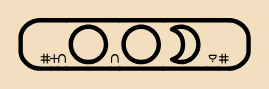
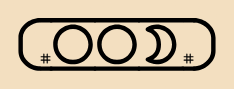
| Leading zeros | 007 |
Neninimun |
 |
 |
#~IIM |
The aim is for learners to recognise the recurring patterns and eventually read, write and understand nanpa-linja-n directly.
This table shows which syllables are allowed for each decimal digit when reading and writing a nanpa-linja-n proper name.
In strict mode, each digit has only one accepted syllable. For example, digit 1 uses we, digit 2 uses te, and digit 5 uses le.
In relaxed mode, some digits can also use extra syllables that mean the same digit. For example, digit 1 can use we or wa, digit 2 can use te or tu, and digit 5 can use le or lu.
The e, a, i, o, and u columns show the nanpa-linja-n glyphs for the supporting vowel used in some digit syllables.
For ni, na, and nu, the supporting consonant is represented in nanpa-linja-n by the sitelen pona glyph nena.
The large glyph column shows the main sitelen pona glyph used for that digit.
The small glyph row shows the small supporting glyph associated with each vowel column.
In relaxed mode, for example, we will accept Nemun, as well as Nemen, to represent the number 7.
Relaxed mode is preferred because it allows some digits to be represented using more natural syllables.
In strict mode, each digit has only one accepted syllable. For example, digit 1 uses we, digit 2 uses te, and digit 5 uses le.
In relaxed mode, some digits can also use extra syllables that mean the same digit. For example, digit 1 can use we or wa, digit 2 can use te or tu, and digit 5 can use le or lu.
The e, a, i, o, and u columns show the nanpa-linja-n glyphs for the supporting vowel used in some digit syllables.
For ni, na, and nu, the supporting consonant is represented in nanpa-linja-n by the sitelen pona glyph nena.
The large glyph column shows the main sitelen pona glyph used for that digit.
The small glyph row shows the small supporting glyph associated with each vowel column.
In relaxed mode, for example, we will accept Nemun, as well as Nemen, to represent the number 7.
Relaxed mode is preferred because it allows some digits to be represented using more natural syllables.
| relaxed | strict | ||||||||||||||||
|---|---|---|---|---|---|---|---|---|---|---|---|---|---|---|---|---|---|
| digit | e | a | i | o | u | large glyph | sitelen glyphs | abbreviated | audio | digit | e | a | i | u | large glyph | sitelen glyphs | abbreviated |
| 0 | - | - | ni | - | - | ijo | | | 0 | - | - | ni | - | ijo | | | |
| 1 | we | wa | - | - | - | wan | | | 1 | we | - | - | - | wan | | | |
| 2 | te | - | - | - | tu | tu | | | 2 | te | - | - | - | tu | | | |
| 3 | se | - | - | - | - | seli | | | 3 | se | - | - | - | seli | | | |
| 4 | - | na | - | - | - | awen | | | 4 | - | na | - | - | awen | | | |
| 5 | le | - | - | - | lu | luka | | | 5 | le | - | - | - | luka | | | |
| 6 | - | - | - | - | nu | utala | | | 6 | - | - | - | nu | utala | | | |
| 7 | me | - | - | - | mu | mun | | | 7 | me | - | - | - | mun | | | |
| 8 | pe | - | pi | - | - | pipi | | | 8 | pe | - | - | - | pipi | | | |
| 9 | je | - | - | jo | - | jo | | | 9 | je | - | - | - | jo | | | |
| small glyph | e | ala | ike | open | uta | small glyph | e | ||||||||||
| small sitelen glyph | | | | | | small sitelen glyph | | ||||||||||
| numeric punctuation | nanpa-linja-n proper name letters | split words | glyph sequence | sitelen glyphs | abbreviated | audio |
|---|---|---|---|---|---|---|
| Starting nanpa-linja-n | Ne | Ne- | nanpa e | | | |
| positive | ne | ne | nena en | | | |
| negative | no | no | nena ona | | | |
| decimal point | none | -n One | nena o nena e | | | |
| ISO thousands | neke | -n Eke | nena e kulupu e | | | |
| percentage | noke | -n Oke-n | nena open kipisi e | | | |
| scientific notation | neko | -n Eko | nena e kala open | | | |
| fraction | nono | -n Ono | nena o nena o | | | |
| mixed fraction | noko | -n Oko | nena open kin open | | | |
| date | neke | -n Eke | nena e kasi e | | | |
| time | neke | -n Eke | nena e kasi e | | | |
| spacer (no value) | nene | -n Ene | nena e nena e | | (optional) | |
| Ending nanpa-linja-n | n | -n | nanpa | | |
How is 125 written as a nanpa-linja-n proper name?
Every nanpa-linja-n proper name for a number begins with Ne- and ends with -n. Each decimal digit maps to a unique Toki Pona Latin letter, which is expressed in the proper name using a designated syllable.
Using the relaxed mapping described above:
- 1 → w → wa
- 2 → t → tu
- 5 → l → lu
These syllables are concatenated between the initial Ne- and the final -n:
Ne + wa + tu + lu + n → Newatulun
Therefore, the nanpa-linja-n proper name for 125 is Newatulun.
As an experimental alternative, a decimal nanpa-linja-n proper name can begin with the separate word Nanpa instead of using the traditional Ne- opening. The decimal digit syllables themselves do not change.
For example, the decimal number 125 has the traditional proper name Newatulun. In the alternative notation it is written as Nanpa Watulun.
In sitelen pona, this alternative decimal form is distinguished by a colon immediately after the opening nanpa glyph. The closing nanpa glyph is unchanged.
| decimal | traditional proper name | alternative proper name | full cartouche | abbreviated cartouche |
|---|---|---|---|---|
125 |
Newatulun |
Nanpa Watulun |
½½¼¼¼½ | ½½½ |
Cartouche source forms for the example above are
[nanpa : wan ala tu uta luka uta nanpa] for the full form and [nanpa : wan tu luka nanpa] for the abbreviated form.
Pronunciation note: In this experimental notation, Nanpa may be pronounced as two clearly separated syllables, Nan-pa, to help distinguish the numeric opening marker from the ordinary Toki Pona word nanpa when listening.
If 'Nanpa Tuwan' could get confused with 'nanpa tu wan' during communication, then you can always use the nanpa-linja-n strict form of the digits to avoid confusion and say 'Nanpa Tewen' or just use the original form and say 'Netuwan'.
As an experimental alternative, contextual nanpa-linja-n cartouches can use an explicit opening word to identify their meaning. A time cartouche begins with Tenpo, a date cartouche begins with Suno, a telephone-number cartouche may begin with Toki, a general-coordinate cartouche begins with Lon, and a latitude/longitude cartouche begins with Ma. The decimal digit syllables and the existing numeric separators do not change.
In sitelen pona, the opening tenpo, suno, toki, lon or ma glyph is followed immediately by a colon. The closing nanpa glyph is unchanged. kasi continues to separate the components of a date or time, the existing no-value spacer continues to separate groups in a telephone number, and kiwen separates coordinate components.
Telephone numbers will normally be parsed and rendered using the explicit decimal Nanpa opening. However, when a successfully parsed telephone-number proper name explicitly begins with Toki, the telephone-number type is preserved and the cartouche may instead be rendered with the opening toki glyph. Other ordinary decimal numeric input continues to use Nanpa by default.
This makes the meaning explicit when the same numeric structure could otherwise be ambiguous. For example,
12:30 is a time and therefore uses Tenpo, while --12-30 is a yearless month-and-day date and therefore uses Suno. A complete date such as 2025-12-30 also uses Suno. The telephone example +1-234-555-6789 can use Toki when that opening is explicitly present in the parsed proper name. General coordinates such as lon:(23.4,-5.67,+81.2) use Lon, while geographic latitude/longitude such as ma:(+12.3,-4.56) use Ma.
| input | traditional proper name | alternative proper name | full cartouche | abbreviated cartouche |
|---|---|---|---|---|
12:30 |
Newatun Eke Senin |
Tenpo Watun Eke Senin |
½½¼¼¼¼⅓¼¼¼½ | ½½⅓½ |
--12-30 |
Newatun Eke Senin |
Suno Watun Eke Senin |
½½¼¼¼¼⅓¼¼¼½ | ½½⅓½ |
2025-12-30 |
Netunitulun Eke Watun Eke Senin |
Suno Tunitulun Eke Watun Eke Senin |
½½¼¼¼¼¼¼⅓¼¼¼¼¼⅓¼¼¼½ | ½½⅓⅓½ |
+1-234-555-6789 |
Nene Wan Ene Tusenan Ene Lululun Ene Numupijon |
Toki Newan Ene Tusenan Ene Lululun Ene Numupijon |
½½¼⅔¼¼¼¼¼¼¼¼¼¼¼¼¼¼¼¼¼¼¼¼¼¼¼½ | ½½⅔½ |
lon:(23.4,-5.67,+81.2) |
— |
Lon Tusen One Nan Eke Nolun One Numun Eke Nepiwan One Tun |
½½¼¼¼⅔¼¼¼¼¼⅓¼¼⅔¼¼⅔¼¼¼¼¼¼⅓¼¼⅔¼¼¼⅔¼¼¼½ | ½½⅔⅓⅔⅔⅓⅔⅔½ |
ma:(+12.3,-4.56) |
— |
Ma Newatun One Sen Eke Nonan One Lunun |
½½¼⅔¼¼¼⅔¼¼¼¼¼⅓¼¼⅔¼¼⅔¼¼¼¼½ | ½½⅔⅔⅓⅔⅔½ |
The coordinate rows use explicit Lon and Ma contextual forms, so no separate traditional coordinate-specific proper name is shown.
Cartouche source forms for
Cartouche source forms for
Cartouche source forms for
Cartouche source forms for
Cartouche source forms for
Cartouche source forms for
12:30 are [tenpo : wan ala tu uta nena e kasi e seli e nena ijo nanpa] for the full form and [tenpo : wan tu kasi seli ijo nanpa] for the abbreviated form.Cartouche source forms for
--12-30 are [suno : wan ala tu uta nena e kasi e seli e nena ijo nanpa] for the full form and [suno : wan tu kasi seli ijo nanpa] for the abbreviated form.Cartouche source forms for
2025-12-30 are [suno : tu uta nena ijo tu uta luka uta nena e kasi e wan ala tu uta nena e kasi e seli e nena ijo nanpa] for the full form and [suno : tu ijo tu luka kasi wan tu kasi seli ijo nanpa] for the abbreviated form.Cartouche source forms for
+1-234-555-6789 are [toki : nena en wan ala nena e nena e tu uta seli e nena awen nena e nena e luka uta luka uta luka uta nena e nena e nena utala mun uta pipi ike jo open nanpa] for the full form and [toki : en wan tu seli awen luka luka luka utala mun pipi jo nanpa] for the abbreviated form.Cartouche source forms for
lon:(23.4,-5.67,+81.2) are [lon : tu uta seli e nena o nena e nena awen nena e kiwen e nena ona luka uta nena o nena e nena utala mun uta nena e kiwen e nena en pipi ike wan ala nena o nena e tu uta nanpa] for the full form and [lon : tu seli o awen kiwen ona luka o utala mun kiwen en pipi wan o tu nanpa] for the abbreviated form.Cartouche source forms for
ma:(+12.3,-4.56) are [ma : nena en wan ala tu uta nena o nena e seli e nena e kiwen e nena ona nena awen nena o nena e luka uta nena utala nanpa] for the full form and [ma : en wan tu o seli kiwen ona awen o luka utala nanpa] for the abbreviated form.
Hexadecimal is a base-16 number system. It uses the digits 0–9 and the letters A–F. To enter a hexadecimal value, begin it with #, for example
#AF or #C0FFEE. Hex digits 0–9 use the existing nanpa-linja-n digit glyphs shown above; A–F add six hexadecimal digit combinations.
What is hexadecimal useful for?
- Colors — for example
#FF0000for red. - IPv4 addresses — for example
192.168.1.1can be written in hexadecimal asC0.A8.01.01; IPv6 addresses use hexadecimal directly. - Unicode code points — for example
U+F193D. - Computer values — hexadecimal is a compact way to write many numeric values used by software and computers.
The six additional hexadecimal digits use the following syllables and sitelen pona glyphs. These arbitrary identifier syllables were chosen to avoid overlapping with the existing syllables for decimal digits 0–9. Because B, C, D, and F are not letters in the Toki Pona alphabet, there is no straightforward one-to-one way to map the hexadecimal letters directly. Their initial consonants—j, l, m, p, s, and t—are therefore assigned in this alphabetical order to the hexadecimal digits A, B, C, D, E, and F, respectively. Most use the vowel a; si is used for E because sa already occurs in Nasa, the hexadecimal opening marker:
| hex digit | syllable | large glyph | supporting glyph | sitelen glyphs | abbreviated | audio |
|---|---|---|---|---|---|---|
| A | ja | jan | ala | | | |
| B | la | lawa | ala | | | |
| C | ma | ma | ala | | | |
| D | pa | pakala | ala | | | |
| E | si | sike | ike | | | |
| F | ta | tan | ala | | |
Examples of hexadecimal input and output:
| input | nanpa-linja-n hexadecimal proper name | full hex cartouche | abbreviated hex cartouche | audio |
|---|---|---|---|---|
#AF |
Nasa Jatan |
½½¼¼½ | ½½½ | |
#C0FFEE |
Nasa Manin Eke Tatan Eke Sisin |
½½¼¼¼¼⅓¼¼¼¼¼⅓¼¼¼½ | ½½⅓⅓½ |
Hexadecimal proper names begin with Nasa. Hex cartouches use nasa at the beginning and end, with a colon after the opening nasa, so they are visually distinct from decimal nanpa-linja-n cartouches.
Longer hexadecimal values and separated hexadecimal groups use these supporting forms:
| use | proper-name form | glyph sequence | sitelen glyphs | abbreviated | audio |
|---|---|---|---|---|---|
| automatic grouping | -n Eke | nena e kule e | | | |
| separator with no numeric value | -n Ene | nena e nena e | | |
For example,
#FEDCBA uses automatic grouping between FE, DC and BA without giving that separator a numeric value. Its proper-name form is Nasa Tasin Eke Paman Eke Lajan . This is useful for separating RGB hex encodings.
Similarly,
#FE:DC:BA uses the separator between FE, DC and BA without giving that separator a numeric value. Its proper-name form is Nasa Tasin Ene Paman Ene Lajan .
Pronunciation note: In hexadecimal notation, Nasa may be pronounced as two clearly separated syllables, Na-sa, to help distinguish the hexadecimal opening marker from the ordinary Toki Pona word nasa when listening.
Binary is a base-2 number system using only the digits 0 and 1. To enter a binary value, begin it with lowercase 0b, for example
0b101 or 0b11001010. Uppercase 0B is not a binary prefix. Binary digits reuse the existing nanpa-linja-n digit syllables and sitelen pona glyphs for decimal digits 0 and 1.
Binary proper names begin with Noka. Binary cartouches use noka at the beginning and end, with a colon after the opening noka. When parsing a binary cartouche, the colon is optional in the same way as the existing hexadecimal nasa cartouche syntax; canonical rendering includes the colon.
Binary uses the existing 0 and 1 mappings. In relaxed mode, digit 0 is ni and digit 1 is wa; strict mode uses ni and we.
| binary digit | relaxed syllable | strict syllable | large glyph | full sitelen glyphs (relaxed) | abbreviated |
|---|---|---|---|---|---|
| 0 | ni | ni | ijo | | |
| 1 | wa | we | wan | | |
Example binary input and output:
| input | relaxed binary proper name | full binary cartouche | abbreviated binary cartouche |
|---|---|---|---|
0b101 |
Noka Waniwan |
½½¼¼¼½ | ½½½ |
The source cartouche forms for
0b101 are [noka : wan ala nena ijo wan ala noka] in relaxed full form and [noka : wan ijo wan noka] in abbreviated form. Binary input and rendering are experimental and use the same parser/rendering conventions as hexadecimal, with 0b and digits 0–1 replacing # and hexadecimal digits.
See the number-to-proper-name page for a more interactive experience.
The decimal number renderer can render any decimal number and produce an audio pronunciation. The encoding of decimal points and other numeric punctuation, together with the strict and relaxed digit mappings, is explained with examples on this page and in detail in the
nanpa-linja-n main documentation
.
To communicate "007", say "Neninimun".
(It is very easy to encode decimal digit sequences and preserve leading and trailing zeros.)
sina wile toki e "007" la, o toki e "Neninimun".
(ni li pona mute tawa awen e nanpa ala lon open en lon pini.)
Listen and try to guess the decimal numbers.
(It is very easy to encode decimal digit sequences and preserve leading and trailing zeros.)
sina wile toki e "007" la, o toki e "Neninimun".
(ni li pona mute tawa awen e nanpa ala lon open en lon pini.)
Listen and try to guess the decimal numbers.
Tool: Multiline Latin text → sitelen pona glyphs o lukin e ilo ni: sitelen toki pona mute-linja tawa sitelen pona
Multiline Latin text → sitelen pona glyphs → PNG image file download and PDF file download
o lukin e ilo ni: sitelen toki pona mute-linja tawa sitelen pona
Tool: Represent decimal numbers as nanpa-linja-n proper names and sitelen pona cartouches ilo pi pana nanpa (poka) + ilo sitelen pi poki nimi
Convert decimal numbers to nanpa-linja-n cartouches
ilo pi pana nanpa (poka) + ilo sitelen pi poki nimi
Learn: See how numbers become nanpa-linja-n proper names, audio, and sitelen pona cartouches o lukin. o kute. o kama sona e nasin pi nanpa-linja-n
Enter a number and follow the conversion step by step. Listen to the
nanpa-linja-n proper name and see the full and preferred abbreviated
sitelen pona cartouches.
Open the nanpa-linja-n number-to-proper-name, audio, and cartouche learning page
o lukin e nasin ni: nanpa li kama nimi nanpa-linja-n. o kute e nimi
Practice: Read abbreviated sitelen pona cartouches and learn nanpa-linja-n proper names o lukin e poki nimi nanpa lili. o kama sona e nimi nanpa-linja-n
Read abbreviated nanpa-linja-n sitelen pona cartouches, gradually reveal
their glyphs as you type, and practise writing the corresponding proper names.
Open the nanpa-linja-n abbreviated cartouche reading practice
o lukin e poki nimi nanpa lili. o sitelen e nimi nanpa
Practice: Listen to audio and learn to understand and pronounce nanpa-linja-n proper names o kute. o toki. o kama sona e nanpa-linja-n
Listen to nanpa-linja-n proper names, identify the decimal numbers,
and practise their pronunciation.
Open the nanpa-linja-n listening and pronunciation practice
o kute e nimi nanpa. o toki e nimi nanpa
Tool: English proper names tokiponizer o lukin e ilo pi ante nimi jan pi toki Inli tawa toki pona
English proper names tokiponizer
ilo ni li ante e nimi jan pi toki Inli tawa toki pona
Tool: Control how proper names are rendered on all pages of this site o lukin o awen e nasin pi sitelen nimi pona lon lipu ale
Control how proper names are rendered on all pages of this site
o awen e nasin pi sitelen nimi pona lon lipu ale
Tool: Video caption overlay editor → OTIO zip file download o lukin e ilo pi sitelen toki pona lon sitelen tawa
Toki Pona video caption overlay editor → OTIO zip file download
ilo pi sitelen toki pona lon sitelen tawa
Tool: Layout editor → PNG image file download o lukin e lo pi ante lon ijo
Layout editor → PNG image file download
o lukin e lo pi ante lon ijo
Tool: nanpa-linja-n cartouche calculator ilo nanpa pi poki nimi pi nanpa-linja-n
nanpa-linja-n cartouche calculator
ilo nanpa pi poki nimi pi nanpa-linja-n
Tool: nanpa-linja-n calendar ilo tenpo pi nanpa-linja-n
nanpa-linja-n calendar
ilo tenpo pi nanpa-linja-n
Game: Country name cartouche crossword game o lukin e musi nimi ma pi poki nimi
country name cartouche crossword game
musi nimi ma pi poki nimi
Game: Memory cards game o lukin e musi pi lipu sona
memory cards game
musi pi lipu sona
Game: Cartouche spelling game o lukin e musi pi sitelen pona
cartouche spelling game
sitelen pona
Game: 15 puzzle game o lukin e musi pi leko tawa nanpa Newelen pi toki pona
15 puzzle game
musi pi leko tawa nanpa Newelen pi toki pona
Game: 2048 game o lukin e musi nanpa Neteninapen
2048 game
musi nanpa Neteninapen
Game: nanpa-linja-n guess the number game o lukin e musi pi alasa nanpa nanpa-linja-n pi toki pona
guess the number game
musi pi alasa nanpa nanpa-linja-n pi toki pona
Game: nanpa-linja-n maze game o lukin e musi pi nasin pi nanpa-linja-n lon toki pona
maze game
musi pi nasin pi nanpa-linja-n lon toki pona
Proposal: Fractional glyph scaling inside sitelen pona cartouches lipu pi nasin sin: ante suli pi sitelen lon poki nimi pi sitelen pona
fractional glyph scaling inside sitelen pona cartouches
ante suli pi sitelen lon poki nimi pi sitelen pona
Info: Toki Pona nanpa-linja-n main documentation lipu sona suli pi nanpa-linja-n
Other Sites: Useful Toki Pona sites
https://tokipona.net/
https://sitelenpona.net/
https://raacz.neocities.org/toki-pona/beginner-material/
https://sitelenpona.net/
https://raacz.neocities.org/toki-pona/beginner-material/
The available nanpa-linja-n fonts are loaded from the preloaded font-pairs manifest when this panel is first opened.
Font details will load when this panel is opened.
These nanpa-linja-n fonts introduce a cartouche-only glyph-scaling convention: the Unicode vulgar fractions ¼ (U+00BC), ⅓ (U+2153), ½ (U+00BD), ⅔ (U+2154), and ¾ (U+00BE) scale the immediately preceding glyph to that fraction of the font size used by the cartouche.
Reference implementations of the nanpa-linja-n library are available in several programming languages. The list below is loaded from the reference implementation manifest when this panel is opened.
Reference implementation details will load when this panel is opened.
Documentation
The README is the primary guide to installing, testing and using the reference implementations, including parser, renderer, font and
astToText usage.
Available reference implementations


Disclaimer: This tool is provided “as is”, with no claim, guarantee, or warranty that the output is correct,
complete, or suitable for any purpose. You are responsible for verifying results.
sona: ilo ni li lon nasin “as is”. mi pana ala e wawa pona.
sina o lukin e ni: sitelen li pona anu seme.
